Features
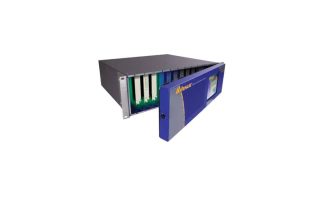
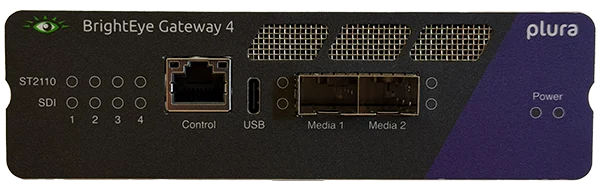
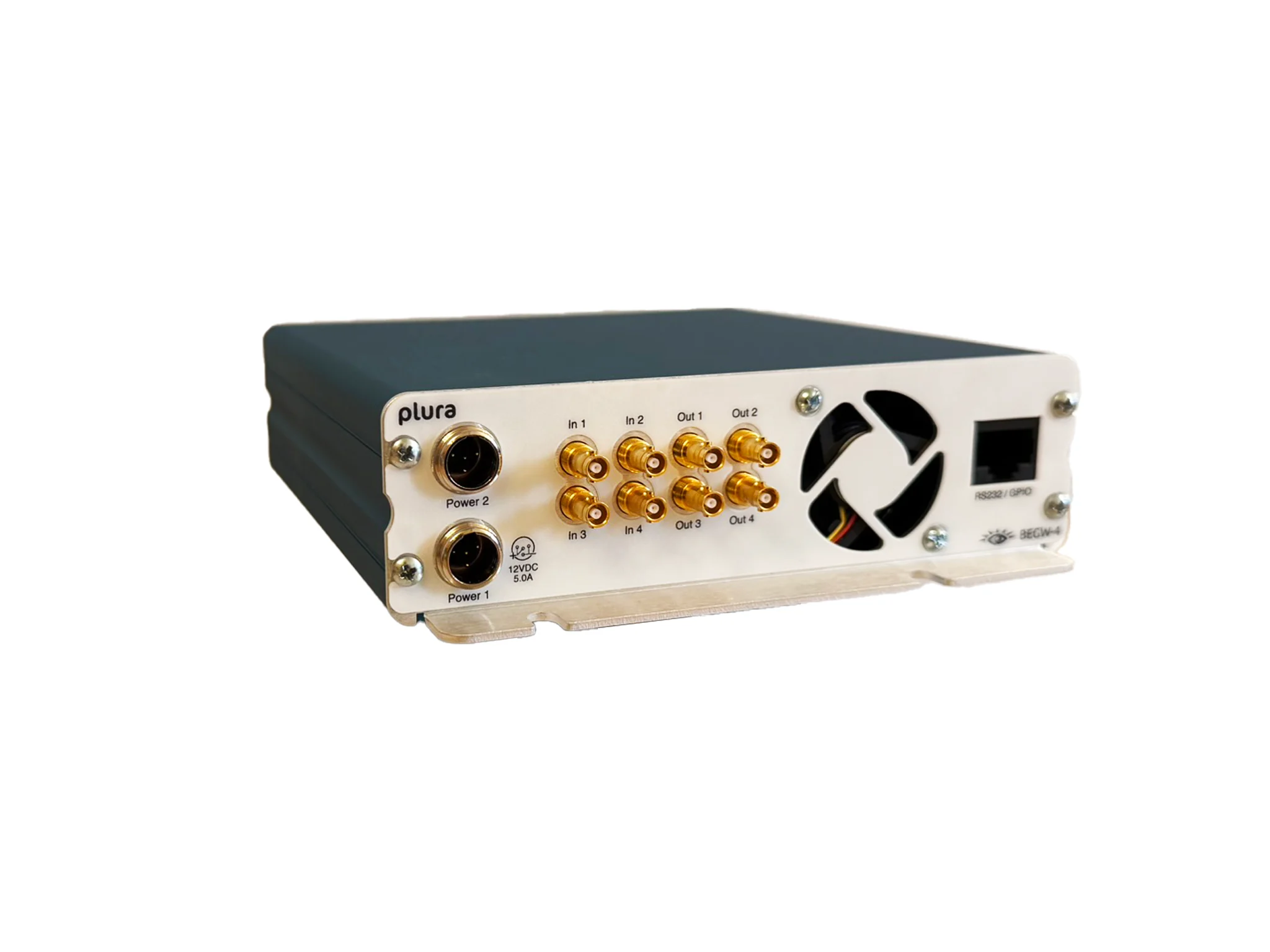
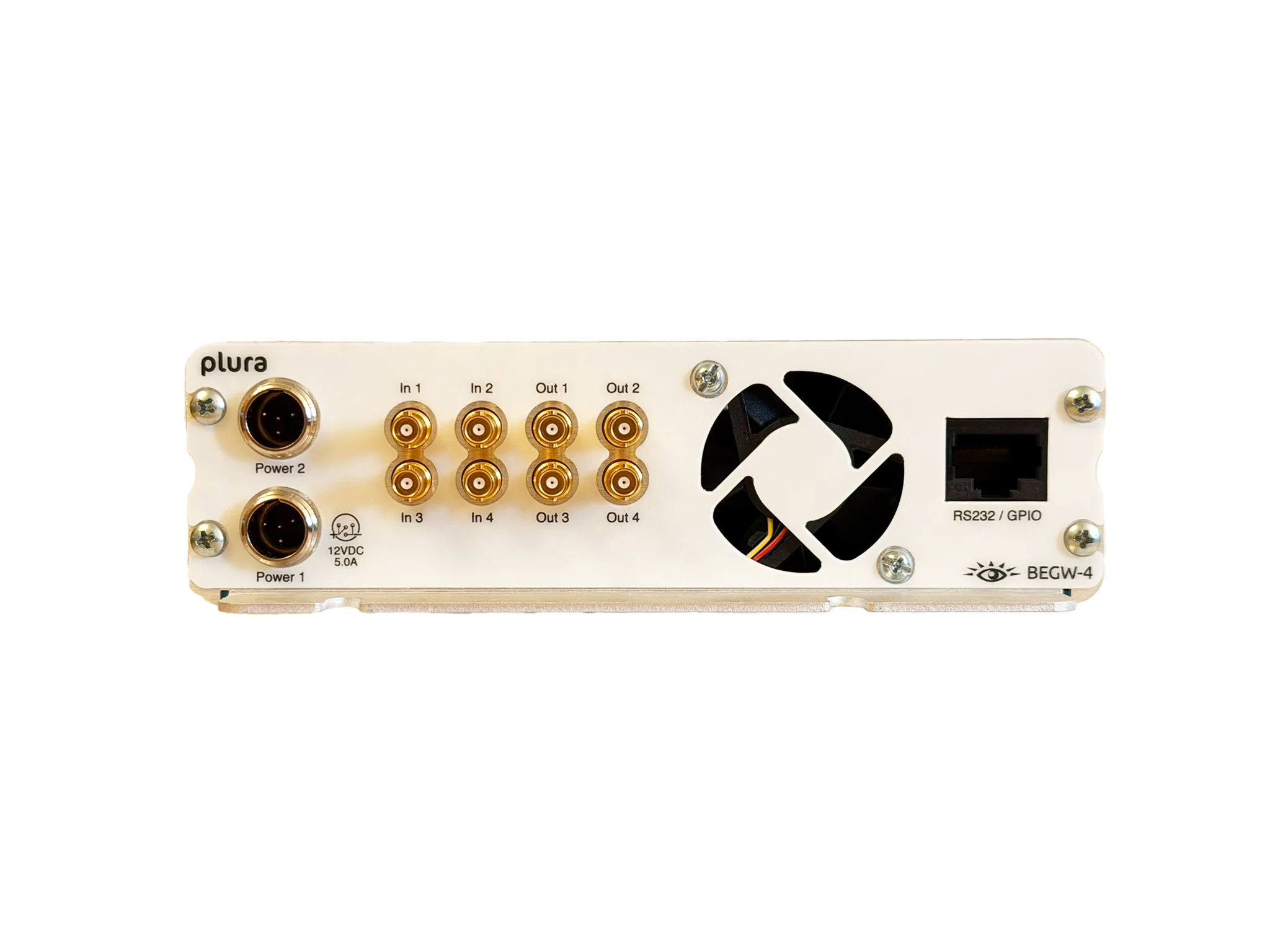
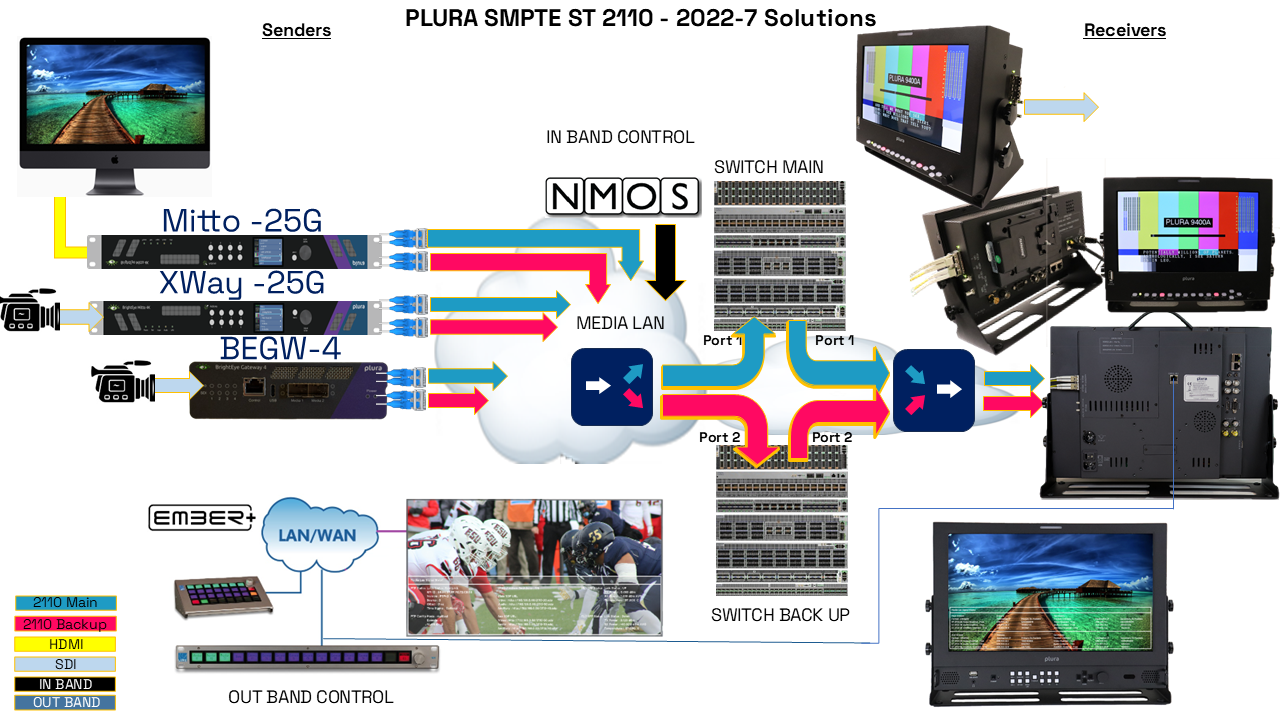
Various Plura offerings from senders and receivers as illustrated in this diagram
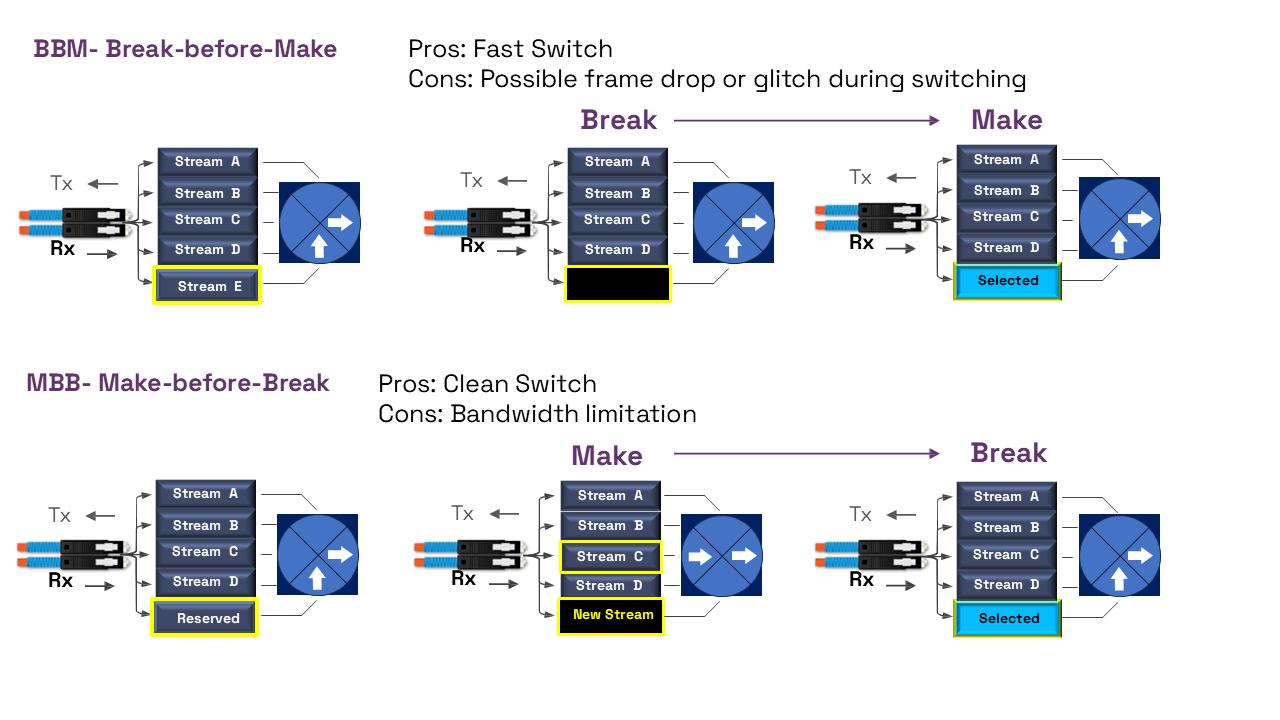
Make before Break & Break before Make
- "Make-before-Break" “MBB” is a seamless video switching method where a receiver prepares a new incoming stream (video, audio, data) while still actively playing the old one, ensuring zero disruption by only switching when the new stream is fully locked and ready.
- Once the new stream is fully synced and ready, the receiver switches, creating a clean, frame-accurate transition without visual interruption, which is a key feature for professional, glitch-free IP media workflows.
- "Break-before-Make" “BBM” which instantly cuts to new content i.e provided a swift switching , however it possibly causing a brief glitch and it may cause a slight interruption (a few frames or packets) during the switch.
- This method ensures the old and new signals never mix, preventing signal interference.
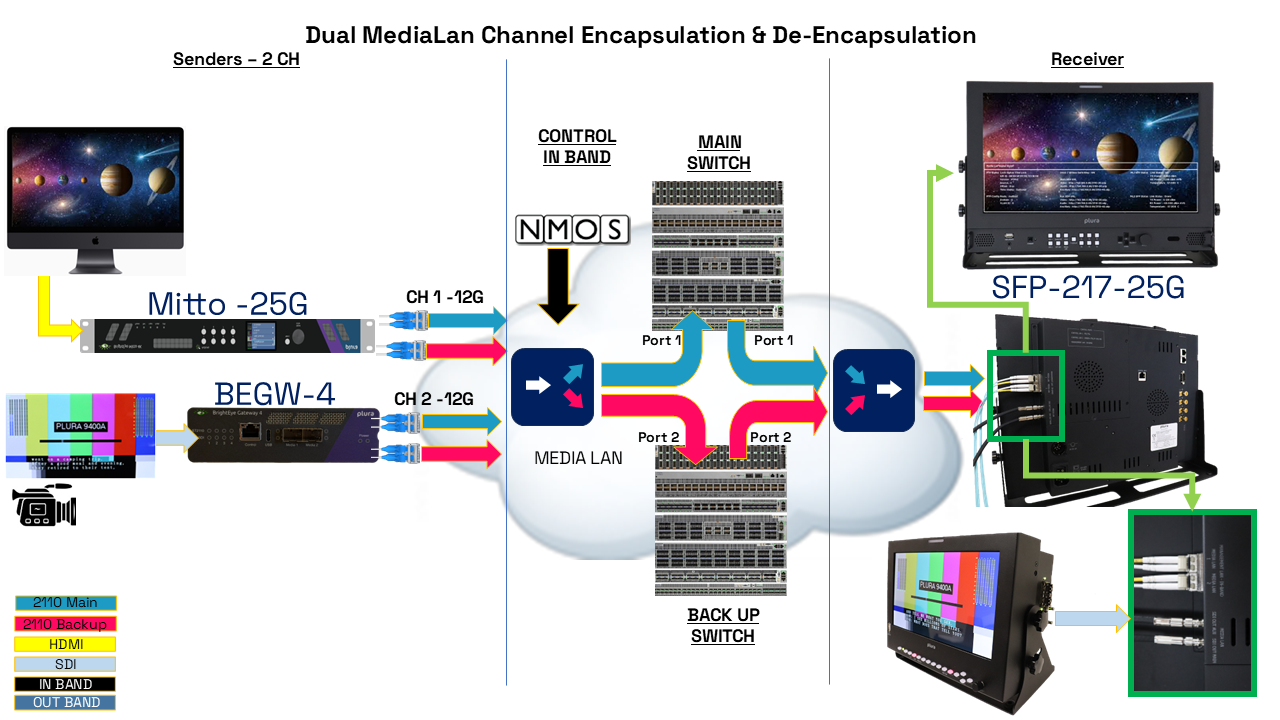
Medialan 2 CH Encap_De_Encap
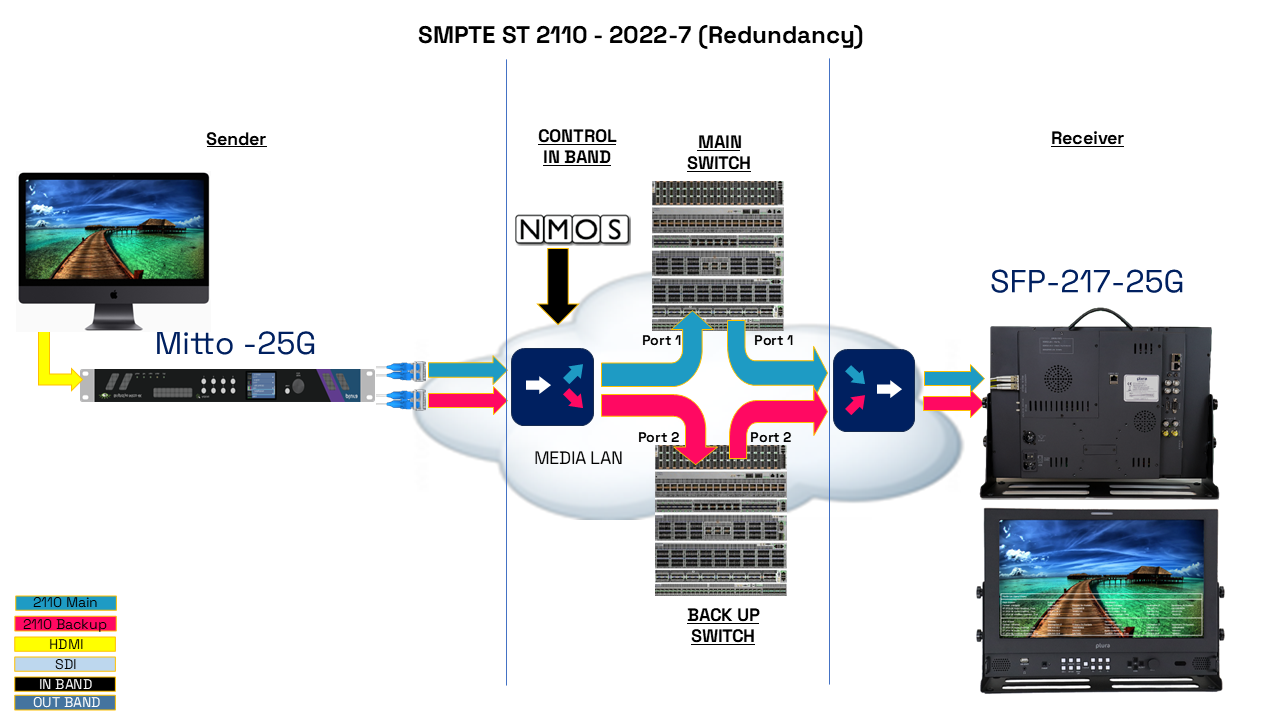
2110 /2022-7 with 2 x 25GbE SFP28 Support- animation with RED & BLUE feed
- SMPTE ST 2110: A suite of standards (ST 2110-10, -20, -30, -40) that separate essence (video, audio, data) into individual streams, packetize them, and send them over IP networks for professional media workflows.
- ST 2022-7 (Redundancy): Enables sending the same video/audio/data streams (essence) over two separate network paths. If one path fails, the receiver seamlessly switches to the other without interruption, ensuring continuous picture/sound.
- IP Support Picture: Refers to how these standards handle video (picture) transport, often uncompressed or lightly compressed (like JPEG XS), supporting high resolutions (UHD, 4K) and frame rates, using standard IT infrastructure like Ethernet switches.
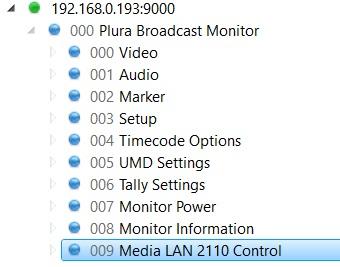
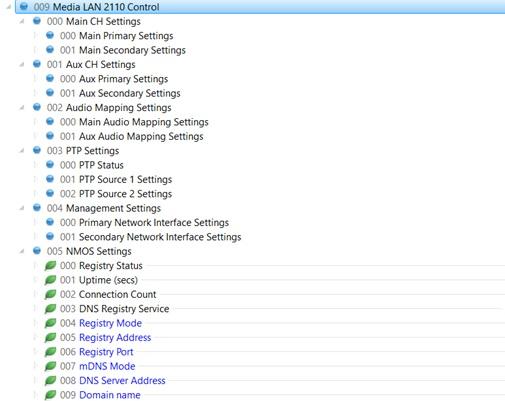
Ember+ support “Ember Tree”
NMOS Support
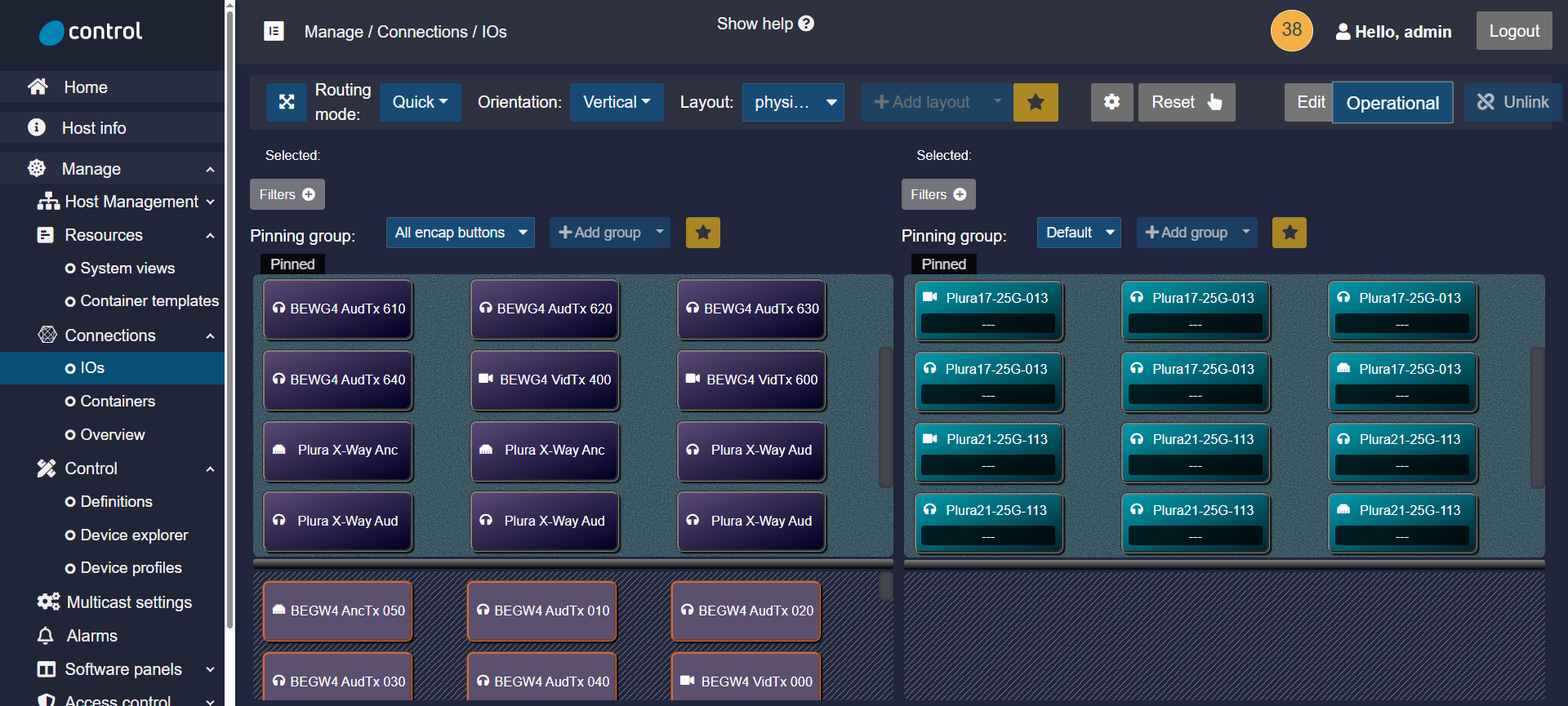
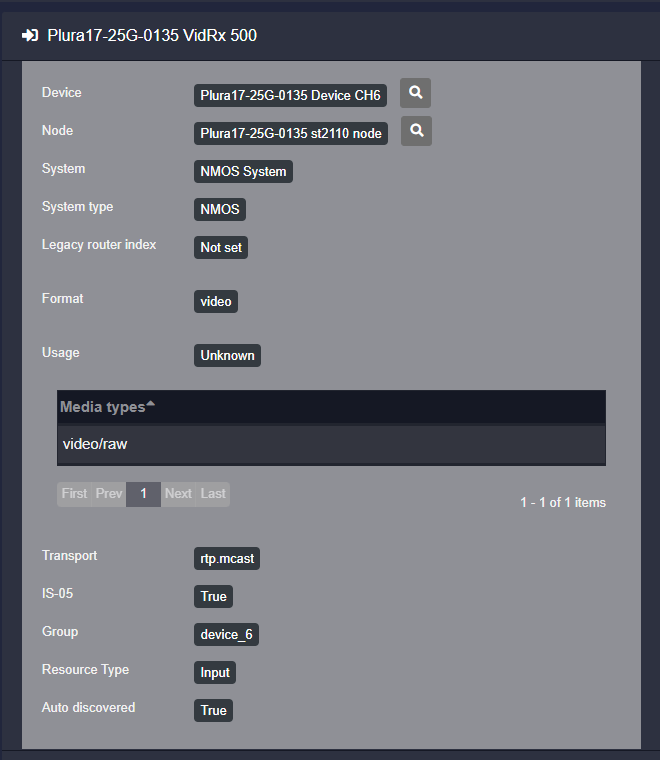
The Advanced Media Workflow Association (AMWA) has published a set of Networked Media Open Specifications (NMOS) to facilitate the orchestration of media flows on IP networks. NMOS provides a vendor-independent method to connect SMPTE ST 2110 senders and receivers, enabling the discovery, connection, and configuration of media devices for transporting video, audio, and ancillary data.
Please note that Plura SFP-25G and SFP-25G-H IP monitors support the AMWA IS-04 and IS-05 specifications. IS-04 enables device discovery and registration, while IS-05 manages device connections. These monitors are officially listed as NMOS/AMWA-approved media nodes at the link here.
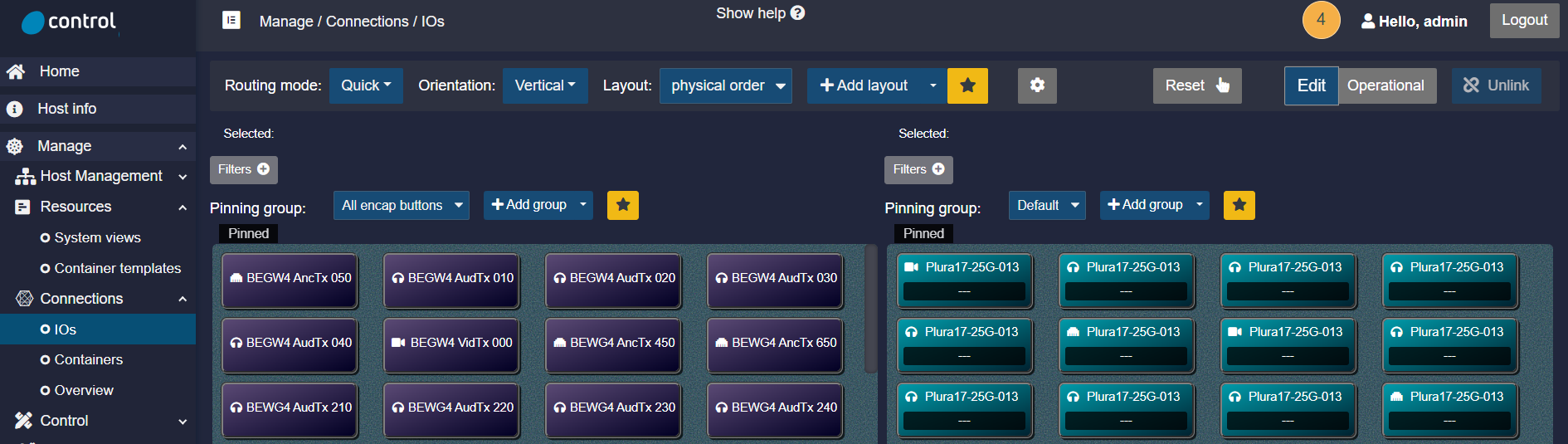
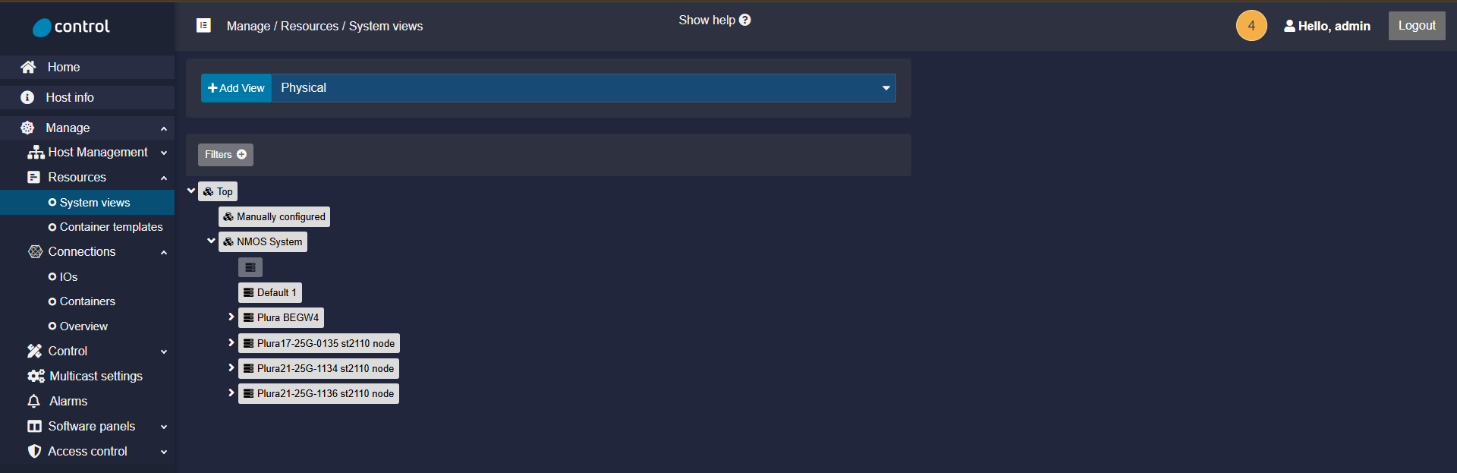
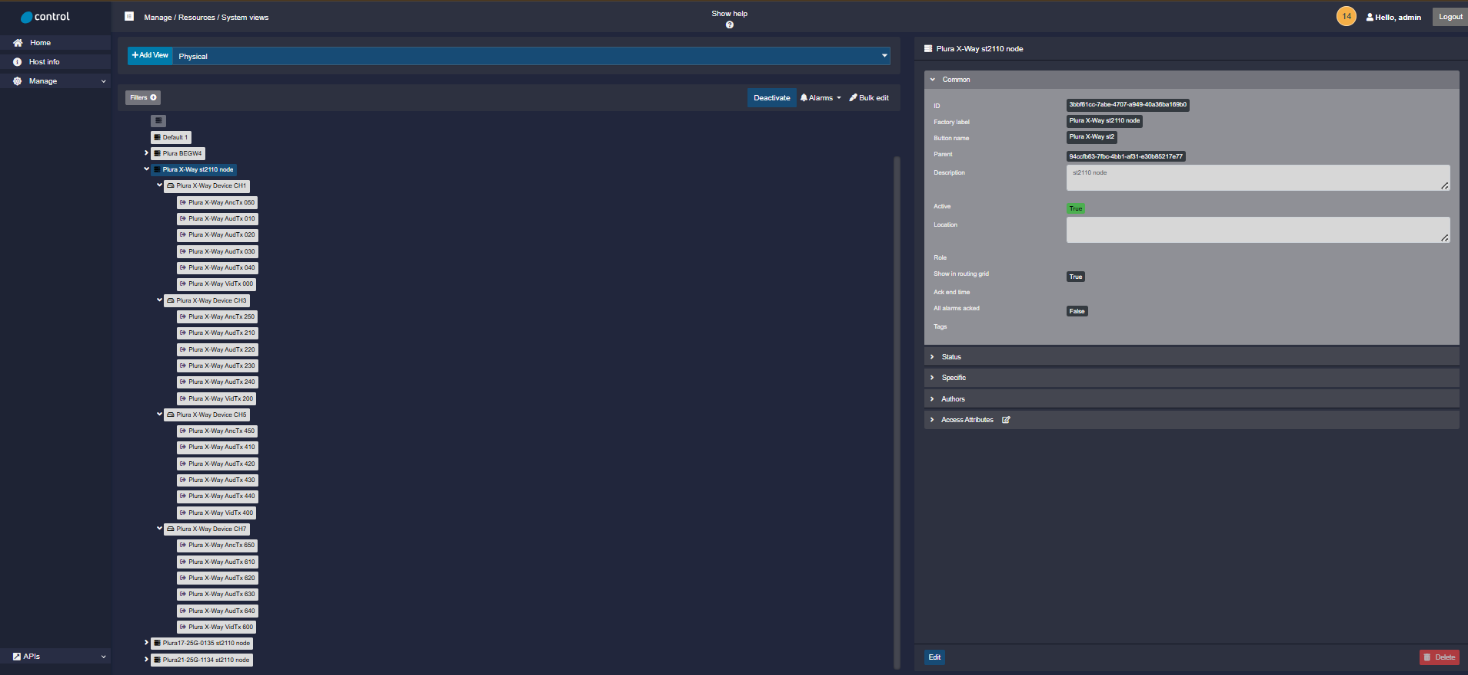
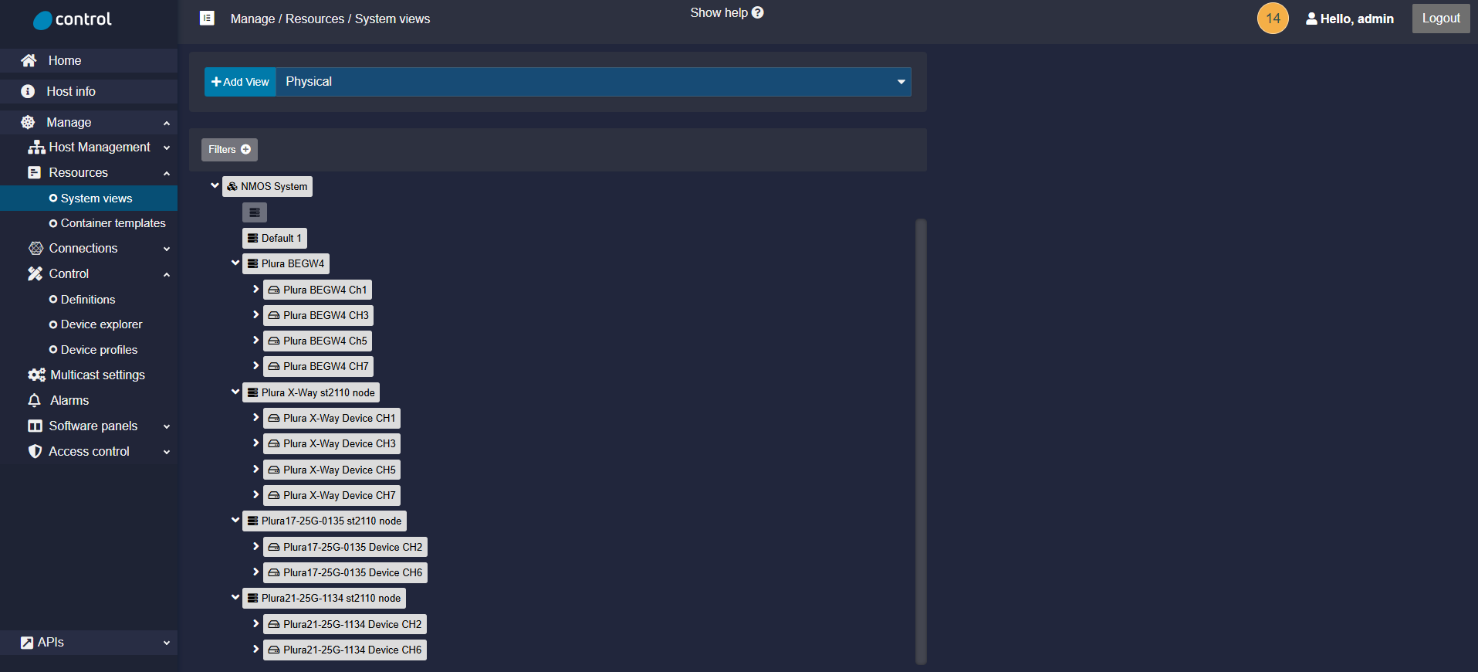
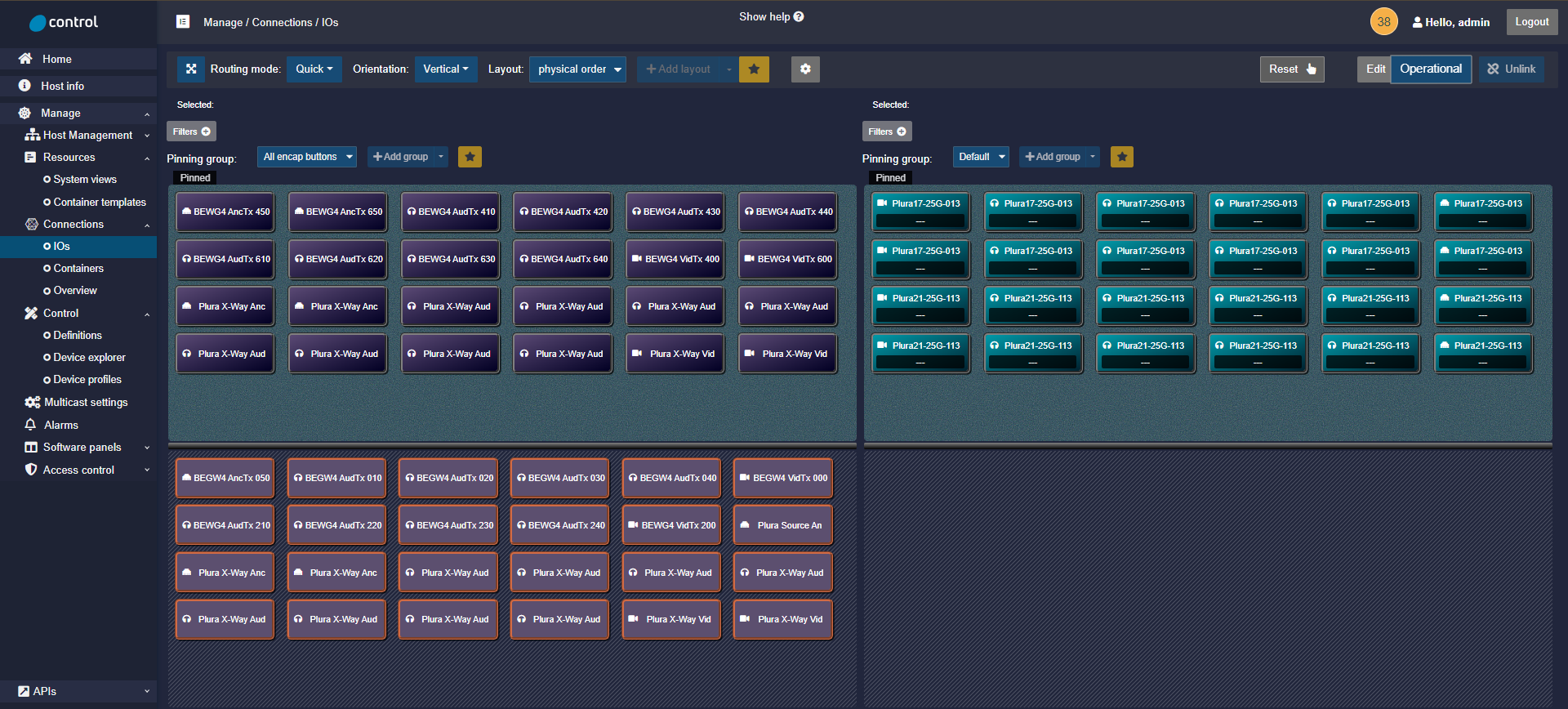
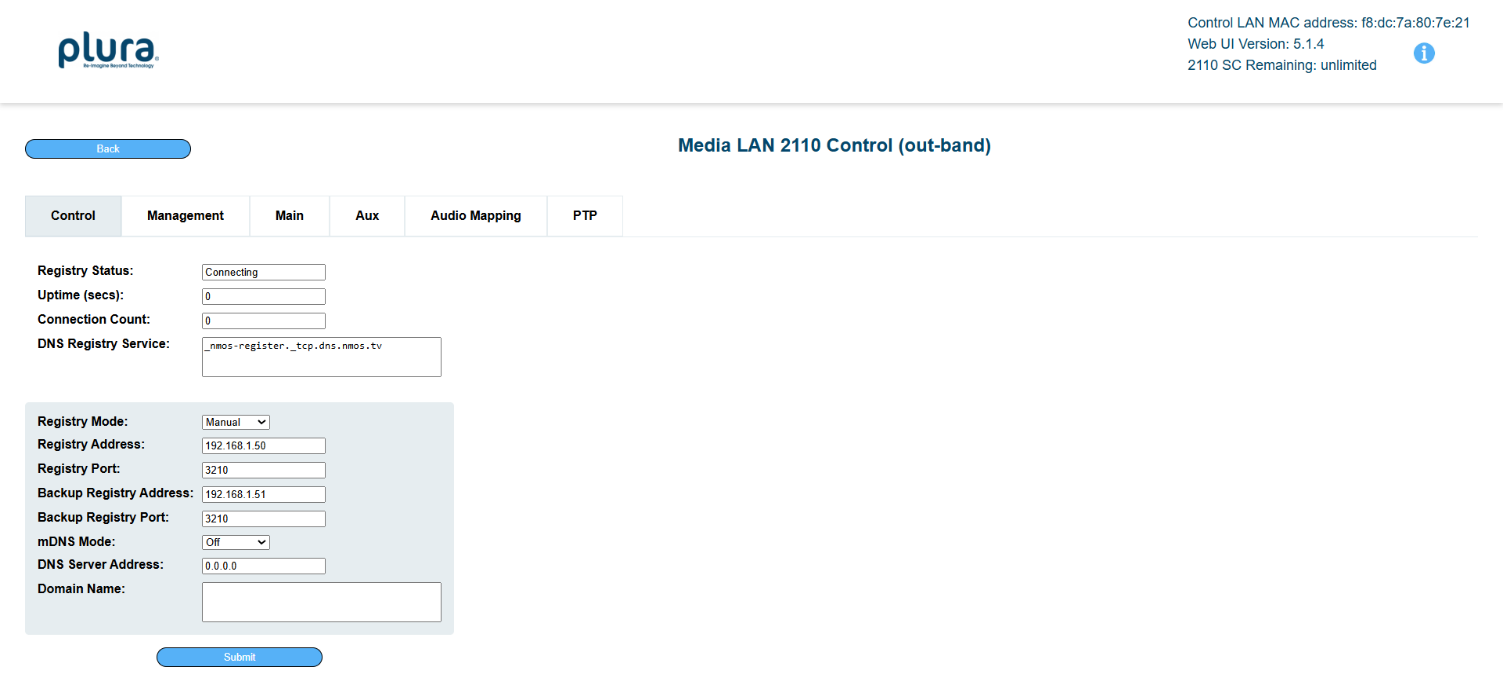
You can find more information regarding NMOS from AMWA here.
SDP Session Description Protocol Support
The Session Description Protocol (SDP) is a file format necessary to describe the contents of the SMPTE 2110 streams, SDP file is NOT a delivery mechanism however it is used between two endpoints sender & receiver for negotiation of network metrics, media types, and other associated properties “timing, video, audio and ancillary data, etc…” .
Session descriptions consist of three sections: session, timing, and media descriptions.
v = (version number=0)
o = (originator and session identifier : username, id, version number, network address)
s = (session name : mandatory with at least one UTF-8-encoded character)
t = (session time)
m = (media descriptions)
There is one file for each type of stream. -10, -20, -30 & -40. The file for each stream contains the following media information:
- The source IP address for the file. This is an address that the sender controls.
- The unicast or multicast address that the receiver can connect to, in order to obtain the content.
- Descriptions of the media in the stream.
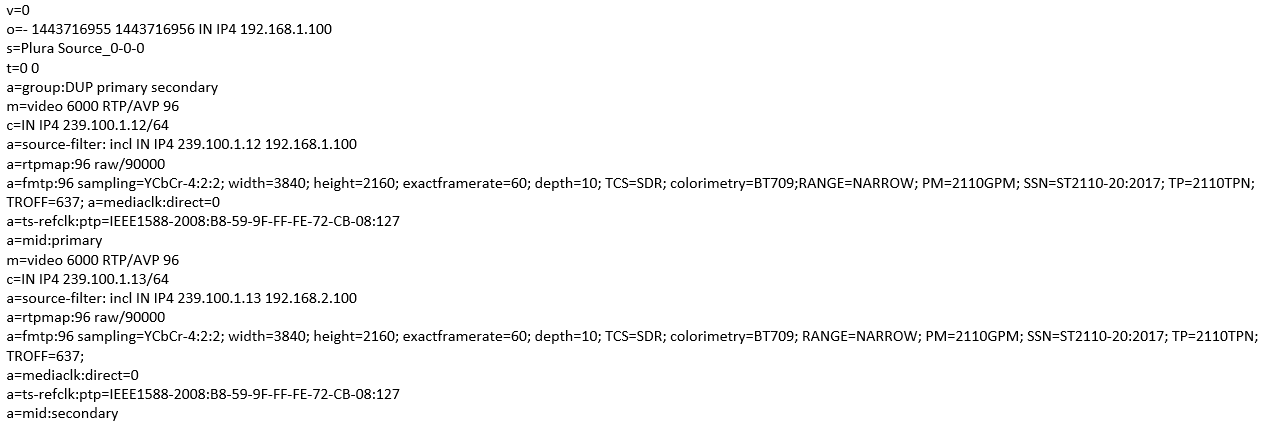
| SDP file | Description |
| v=0 | /version number |
| o=- 1443716955 1443716956 IN IP4 192.168.1.100 | /IP Address |
| s=Plura Source_0-0-0 | /Host Name |
| t=0 0 | /time |
| a=group:DUP primary secondary | /Duplicates Primary / Secondary streams |
| m=video 6000 RTP/AVP 96 | /Destination Port filtering - Primary |
| c=IN IP4 239.100.1.12/64 | /Destination IP filtering - Primary |
| a=source-filter: incl IN IP4 239.100.1.12 192.168.1.100 | /Filtering selection + IP address - Primary |
| a=rtpmap:96 raw/90000 | /2110 def - Primary |
| a=fmtp:96 sampling=YCbCr-4:2:2; width=3840; height=2160; exactframerate=60; depth=10; TCS=SDR; colorimetry=BT709;RANGE=NARROW; PM=2110GPM; SSN=ST2110-20:2017; TP=2110TPN; TROFF=637; a=mediaclk:direct=0 | /Video Metadata + 2110 version (-20) - Primary |
| a=ts-refclk:ptp=IEEE1588-2008:B8-59-9F-FF-FE-72-CB-08:127 | /Master or Clock ID |
| a=mid:primary | /end primary stream |
| m=video 6000 RTP/AVP 96 | /Destination Port filtering - Secondary |
| c=IN IP4 239.100.1.13/64 | /Destination IP filtering - Secondary |
| a=source-filter: incl IN IP4 239.100.1.13 192.168.2.100 | /Filtering selection + IP address - Secondary |
| a=rtpmap:96 raw/90000 | /2110 def - Secondary |
| a=fmtp:96 sampling=YCbCr-4:2:2; width=3840; height=2160; exactframerate=60; depth=10; TCS=SDR; colorimetry=BT709; RANGE=NARROW; PM=2110GPM; SSN=ST2110-20:2017; TP=2110TPN; TROFF=637; a=mediaclk:direct=0 | /Video Metadata + 2110 version (-20) - Secondary |
| a=ts-refclk:ptp=IEEE1588-2008:B8-59-9F-FF-FE-72-CB-08:127 | /Master or Clock ID |
| a=mid:secondary | /end secondary stream |
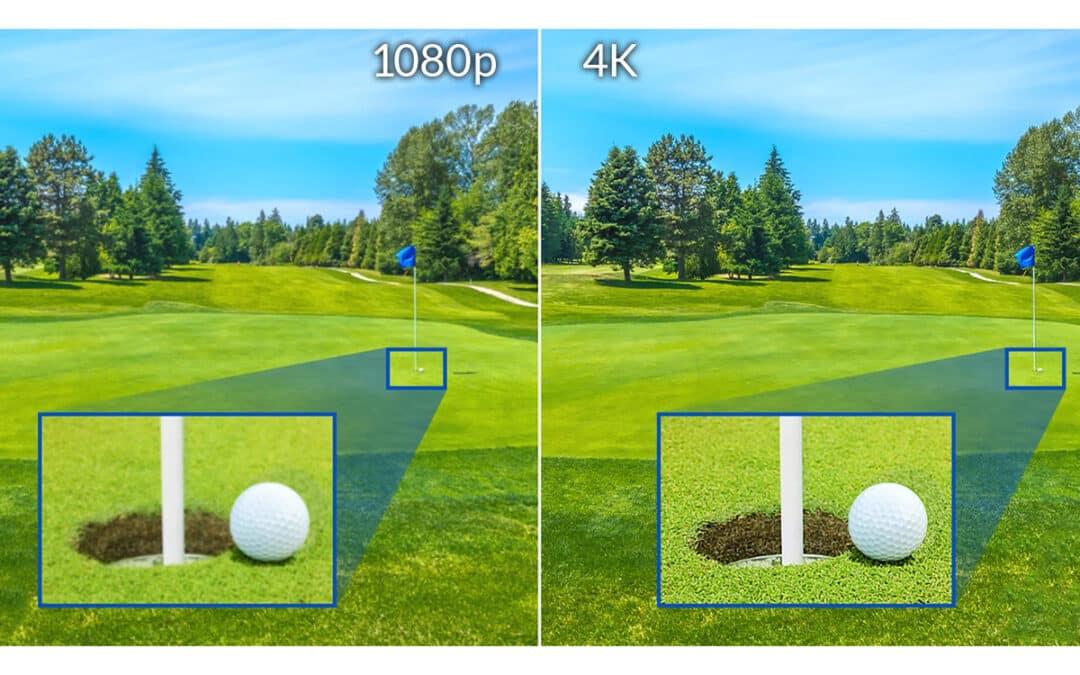
4096 x 2160 panel resolution animation
SD resolution: 640 x 480 pixels
Full HD resolution: 1920 x 1080 pixels
4K resolution: 3840 x 2160 pixels