• Skip to main content
  • Why Plura
    • Our Team
    • Videos
    • 15th Anniv.
    • Our History
    • Case Studies
    • Distributors
  • Products
    • At a Glance
    • X Processing
    • I.M.D.P.
    • Monitors
    • Timing
    • Calibration
    • Viewfinders
  • Support +
    • Downloads
    • Virtual Mtg.
    • RMA Request
  • News & Events
    • News
    • Events
  • Contact
  • Why Plura
    • Our Team
    • Videos
    • 15th Anniv.
    • Our History
    • Case Studies
    • Distributors
  • Products
    • At a Glance
    • X Processing
    • I.M.D.P.
    • Monitors
    • Timing
    • Calibration
    • Viewfinders
  • Support +
    • Downloads
    • Virtual Mtg.
    • RMA Request
  • News & Events
    • News
    • Events
  • Contact
Signal Processing
I.M.D.P.
Monitors
Timing
Calibration
Viewfinders
Home  //  Signal Processing  //  Avenue  //  Avenue 8510 4 Channel Audio Processor Sub Module for 8500
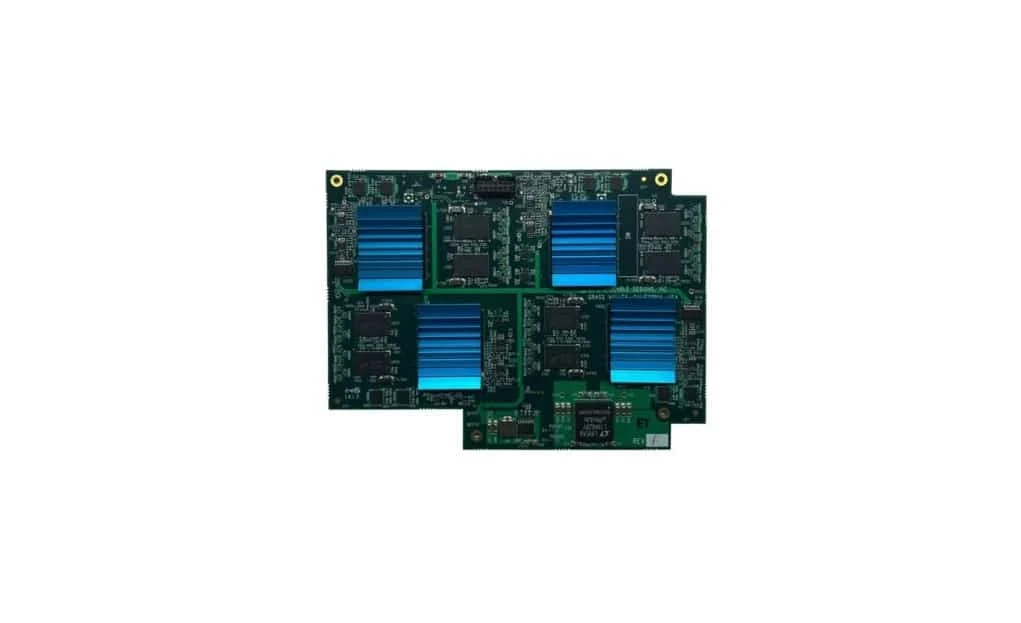
avenue_8510_pcb-1021x623avenue_8510_pcb-1021x623
  • Avenue 8510 4 Channel Audio Processor Sub Module for 8500

    The 8510 Audio Processor is a sub module option for use with the 8500 Video Processing Frame Synchronizer. The 8510 adds both analog and digital audio capability with a flexible architecture that addresses a wide range of audio handling needs.

    When the 8500 is being used as a video A to D converter, the 8510 can perform the same function with the associated audio. If the 8500 is being fed an SDI signal with embedded audio, the 8510 can produce an analog output of that audio. When using the 8500 as an SDI frame sync, the 8510 can properly resynchronize the embedded audio content.

    Flexible Inputs

    The 8510 accepts four channels of balanced analog audio. Analog inputs are digitized at 24 bits of resolution. Two AES inputs provide four channels of digital audio to the input selector. Sample rate converters can be selected in the AES input path, allowing the use of asynchronous digital sources. The 8510 accepts synchronous AC-3 or Dolby E inputs.

    An audio disembedder fed by the SDI input to the 8500 provides four additional channels of digital audio. The input selector allows any of these four channels to serve as inputs to the audio processing functions.

    Mix, Swap and Shuffle

    The 8510 has a full-featured, four-channel audio mixer. Precise control over audio level is provided for each input. A gain of up to +12dB can be applied to signals with low input levels. Signal phase inversion is selectable on a channel-by-channel basis to correct phase errors in incoming material.

    Assignment of input channel to output channel is completely flexible, making it possible to swap any input to any output, or produce a mix of any input combination on any output. All audio processing is performed at the full 24 bit resolution of the system by a digital signal processor (DSP).

    Tracking Audio Delay

    In order to compensate for the delay introduced in the video path by the frame synchronizer function of the 8500, a tracking audio delay automatically delays the four audio channels. This prevents the video synchronizing process from causing lip sync errors. The amount of delay required is communicated to the 8510 by the 8500 module’s microcontroller. Changes in delay are made incrementally over several seconds.

    In addition to the automatic tracking delay, the 8510 has an additional bulk delay that is user-adjustable up to one second in length. This delay can be used to correct lip sync errors that were already present in the original signal.

    Digital and Analog Output

    The four audio output channels can be delivered in both analog and digital form. 24 bit digital to analog conversion produces the analog balanced outputs, with reference level selectable from -10 to +4 dBu.

    The output channels are simultaneously available in AES digital form, synchronous to the video reference supplied to the 8500 module. Finally, the four channels may also be embedded into the SDI output of the 8500.

    Embedded Audio Handling

    The 8510 has been designed to provide superior handling of embedded audio. The disembedder on the input side follows the timing of the SDI input, even if that input is asynchronous to the house reference. The embedder on the output side is synchronous to house. This allows embedded audio to be safely bypassed around the video framestore with the lip sync properly preserved.

    Product Documents

    Datasheet

    • 8510 Data Sheet
    Contact Sales
    • Highlights
    • Specifications
    • Product Downloads

    Description

    • 24 bit processing throughout
    • Up to 4 Balanced Analog Inputs
    • 2 AES Inputs (4 Channels)
    • Embedded Audio Input (4 Channels)
    • Built-in sample rate converter accepts asynchronous inputs
    • Up to 4 Balanced Analog Outputs
    • 2 AES Outputs (4 Channels)
    • Embedded Audio Output (4 Channels)
    • Embedded Audio-Friendly Synchronization
    • Mix, Shuffle, Level Adjust of Embedded Audio
    • Fully adjustable audio levels
    • Complete shuffling and mixing among all channels
    • Phase inversion selectable on a channel basis
    • Tracking Audio Delay
    • User-adjustable Bulk Audio Delay
    • Built-in tone generator
    • 100 Mhz DSP
    • Memory Registers
    • Use with 8500 modules

    Additional information

    Audio Features

    Adjustable Delay, AES, Analog Audio, Disembedder, Embedder

    Control

    Ethernet, RS232, SNMP, AveNet, GPIO

    Product Documents

    Datasheet

    • 8510 Data Sheet

    Related products you might be interested in

    BrightEye 10 Optical/SDI to Analog/SDI ConverterBrightEye 10 is a digital to analog video converter with both SD SDI (electrical) and fiber optic inputs. Output formats include Beta and SMPTE component, RGB, and composite (with simultaneous Y/C). Video processing, encoding and analog conversion is performed digitally at 12 bits of resolution with 8 x oversampling. Front panel controls select between the optical and SDI input, choose the analog output format, and adjust gain. Video levels can be adjusted through the BrightEye Control app. The reclocked SD SDI output follows the input selector, providing optical to electrical conversion when the optical input is selected. BrightEye 10 combines fiber to SD SDI conversion and QC monitoring in one compact unit.
    BrightEye 90-F HD Up/Down Cross Converter and ARC with AES Audio and Optical OutputBrightEye 90-F is a versatile up/down/cross converter or aspect ratio converter for use with analog and digital video signals with the addition of an optical output. Optical connectivity allows for long cable runs between buildings or in mobile applications. Simply set the BrightEye 90-F to output your facility’s preferred HD or SD standard. The BrightEye 90-F will accommodate whatever input you connect analog composite, SD SDI or HD SDI. After setting the output standard, BrightEye 90-F automatically converts the selected input to the correct standard for your facility. BrightEye 90-F will upconvert, downconvert, cross convert, or act as an ARC, as needed. The built-in Frame Synchronizer allows you to feed asynchronous signals to the BrightEye 90-F. An external reference input allows genlock to a house reference. All vertical interval data and closed captioning is faithfully passed. Upconverting to High Definition Feed the analog composite or SD SDI output of a camera to a BrightEye 90-Fand upconvert to HD. You can take the HD signal from the BrightEye 90-F into a switcher or projection system. Upconverting existing SD equipment lets you leverage the equipment you already have and operate in the HD domain. While some cameras may have firewire out, using the video output and upconverting before distribution is preferable since longer cable runs can be achieved and quality is superior. Additionally, the BrightEye 90-F’s reference input allows you to time the upconverted video output for use with a production switcher. Downconverting to Standard Definition BrightEye 90-F will downconvert any type of HD signal and provides both an SD SDI and an analog composite output suitable for broadcast or monitoring. Cross Conversion It’s easy to convert between various HD standards, whether 720p or 1080i. Simply select the output standard you need and connect the input, that’s all there is to it. Aspect Ratio Conversion For converting between SD 4:3 and HD 16:9, BrightEye 90-F has you covered. Just select the output standard you need and connect the input. Audio Processing Made Simple BrightEye 90-F handles both embedded audio and discreet AES digital audio streams. Sixteen channels of embedded audio are supported in BrightEye 90-F. If the incoming video has embedded audio, the audio will be safely bypassed around the video processing and lipsync will be preserved. Audio mixing is available for two of the four embedded groups of audio. The AES I/O ports can be configured for eight channels of incoming audio or for eight channels of audio output. The audio mixer can be used for AES channels as well. Mixer controls are accessed through BrightEye Control Software. Monitoring for Video and Audio Audio monitoring is easy with BrightEye 90-F’s convenient 3.5mm mini jack. Select the audio channels you want to monitor from the front panel and plug in a headset. The HDMI connector on the rear of the unit provides a future proof monitoring interface. Plug it into most LCD monitors for confidence monitoring of your feed. Front Panel and Software Control Input selection, gain control, and test pattern controls are provided through the front panel interface. Audio presence LEDs indicate which channels are detected. Crop, letterbox and pillarbox can all be adjusted from the front panel. For more control, BrightEye Control Software provides controls for proc, audio mixing, and other advanced controls.
    BrightEye 90-FA HD Up/Down Cross Converter and ARC with Analog Audio and Optical OutputBrightEye 90-FA is a versatile up/down/cross converter or aspect ratio converter for use with analog and digital video signals with the addition of an optical output. Optical connectivity allows for long cable runs between buildings or in mobile applications. Simply set the BrightEye 90-FA to output your facility’s preferred HD or SD standard. The BrightEye 90-FA will accommodate whatever input you connect analog composite, SD SDI or HD SDI. After setting the output standard, BrightEye 90-FA automatically converts the selected input to the correct standard for your facility. BrightEye 90-FA will upconvert, downconvert, cross convert, or act as an ARC, as needed. The built-in Frame Synchronizer allows you to feed asynchronous signals to the BrightEye 90-FA. An external reference input allows genlock to a house reference. All vertical interval data and closed captioning is faithfully passed. Upconverting to High Definition Feed the analog composite or SD SDI output of a camera to a BrightEye 90-FA and upconvert to HD. You can take the HD signal from the BrightEye 90-FA into a switcher or projection system. Upconverting existing SD equipment lets you leverage the equipment you already have and operate in the HD domain. While some cameras may have firewire out, using the video output and upconverting before distribution is preferable since longer cable runs can be achieved and quality is superior. Additionally, the BrightEye 90-FA’s reference input allows you to time the upconverted video output for use with a production switcher. Downconverting to Standard Definition BrightEye 90-FA will downconvert any type of HD signal and provides both an SD SDI and an analog composite output suitable for broadcast or monitoring. Cross Conversion It’s easy to convert between various HD standards, whether 720p or 1080i. Simply select the output standard you need and connect the input, that’s all there is to it. Aspect Ratio Conversion For converting between SD 4:3 and HD 16:9, BrightEye 90-FA has you covered. Just select the output standard you need and connect the input. Audio Processing Made Simple BrightEye 90-FA handles both embedded audio and eight channels of analog audio. Sixteen channels of embedded audio are supported in BrightEye 90-FA. If the incoming video has embedded audio, the audio will be safely bypassed around the video processing and lipsync will be preserved. Audio mixing is available for two of the four embedded groups of audio. The analog audio I/O ports can be configured for eight channels of incoming audio or for eight channels of audio output. The audio mixer can be used for analog audio as well. Mixer controls are accessed through the BrightEye Control app. Monitoring for Video and Audio Audio monitoring is easy with BrightEye 90-FA’s convenient 3.5mm mini jack. Select the audio channels you want to monitor from the front panel and plug in a headset. The HDMI connector on the rear of the unit provides a future proof monitoring interface. Plug it into most LCD monitors for confidence monitoring of your feed. Front Panel and Software Control Input selection, gain control, and test patterns control are provided through the front panel interface. Audio presence LEDs indicate which channels are detected. Controls for crop, letterbox and pillarbox are accessed from the front panel or the BrightEye Control software. Video and audio levels and the audio mixer can be adjusted through BrightEye Control.
    BrightEye Control SoftwareBrightEye Control allows you to access all of the controls in your BrightEye devices. Adjust video levels, output timing and audio mixing and more. No DIP switches or button hold-downs are needed. Firmware updates, with feature enhancements and bug fixes, are provided for the lifetime of your BrightEye device. Install them with ease from your Mac or PC using BrightEye Control. The BrightEye Control software is included with each BrightEye at no charge. Version History 3.2.2 Fixes window resizing issue on Windows when using Hi-DPI displays. Only released for Windows (32-bit and 64-bit). 3.2.1 Hi-DPI Support on Windows. Control fixes and performance improvements. First Windows 64-bit build. Compatible with Windows 7, 8, 10, and 11 First Apple Silicon native release. Compatible with macOS 10.15+ 3.1.0 Built for Intel x86 64-bit. Compatible with Apple Silicon Macs via emulation. Compatible with macOS 10.15+ Only released for macOS. 3.0.2 Further improvements to connection reliability, especially with older BrightEye devices. Fixes issue with recalling saved settings on units with memory registers. Previously, recalling the saved settings could trigger memory register recalls. You can now set string controls to “”, which allows you to properly remove a feature license. Fixes several crashes related to connecting and disconnecting BrightEye devices. Other small fixes and enhancements. 3.0.1 Improved Connection Reliability Fixed problem where updating BrightEye firmware was sometimes slow. 3.0.0 Replaces BrightEye Mac and BrightEye PC. Improved user interface to make controlling BrightEye devices easier than ever. BrightEye devices now show up in the interface automatically, no need to manually refresh. Improved performance when controlling many BrightEye devices. Support for HiDPI and “Retina” displays. Fixed issues with firmware updates on newer Windows PC’s. Many other bug fixes and enhancements.

    Looking for something else?

    Signal Processing
    I.M.D.P.
    Monitors
    Timing
    Calibration
    Viewfinders

    Contact Sales

    International

    • Plura Europe GmbH Germany
    • Plura MEA Dubai – UAE
    • Plura ASIA Seoul – S. Korea

    The Americas

    • Arizona Plura Broadcast, Inc. HQ

    Stay in touch for news on the latest in product development

    Copyright © 2026 Plura Inc. All Rights Reserved.